The Celts documentary
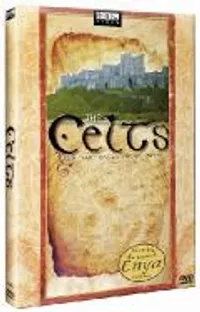
The Celts DVD box.
Originally broadcast on BBC2 in May and June 1987, The Celts: Rich Traditions and Ancient Myths is a landmark six-part documentary series produced by the BBC.
Directed by David Richardson, the series was written and presented by Irish author Frank Delaney, who also published a six-chapter companion book enriched with legendary tales from Irish mythology.
Overview and Production Details
The documentary examines the historical origins, growth, and enduring cultural impact of Celtic civilization across Great Britain and continental Europe.
A 39-minute selection of the soundtrack was originally released in 1987 as the debut album Enya, which was later remastered and reissued as The Celts in 1992.
The entire six-part series was officially released on DVD in Europe and North America in 2004, featuring archived bonus material.
The Six Episodes
Broadcast in hour-long installments, each episode explores specific archaeological periods, historical struggles, and artistic traditions of the Celts.
- The Man with the Golden Shoes — Examines the earliest archaeological and historical evidence for Celtic civilization, focusing on the two core cultural eras: the Hallstatt culture and La Tène culture.
Songs used: "The Celts", "March of the Celts", "Epona", "Severed Head", "Boadicea", "Spaghetti Western", "Bard Dance", "Sword Fight", and "To Go Beyond I". - The Birth of Nations — Traces the emergence and formation of the modern Celtic nations from the territorial changes following the fall of the Roman Empire.
Songs used: "The Celts", untitled cue ("Over Scarecrow"), "Deserted House", "Deireadh An Tuath", "Boadicea", and "The Sun In The Stream". - A Pagan Trinity — Explores ancient Celtic mythology, spiritual folklore, druidic legends, and the subsequent spread of early Christianity among the Irish and Scots.
Songs used: "The Celts", "Fairy Tale I", "Morrighan", "Severed Head", untitled cue, "Triad (Cú Chulainn, Oisín, St. Patrick)", "Deireadh An Tuath", "Fairy Tale II", and "Fairy Tale III". - The Open-Ended Curve — Highlights the distinctive physical art, intricate metalwork, and aesthetic achievements of the Celts from ancient times to the present day.
Songs used: "The Celts", untitled cue, "March of the Celts", "Triad (St. Patrick)", "Portrait", "I Want Tomorrow", and "To Go Beyond I". - The Final Conflict — Details historical conflicts and conquest by neighboring England and France, covering the suppression of the Welsh language, Irish revolution, and transatlantic migration to North America.
Songs used: "The Celts", "Dan y Dŵr", "To Go Beyond II", "The Sun In The Stream", "Deireadh An Tuath", and untitled cue ("Over Funerary Cart"). - The Legacy — Discusses modern Celtic self-identity, highlighting the Welsh Eisteddfod, language survival efforts in Brittany and Cape Breton, contemporary art, and scenes filmed in Portmeirion referencing The Prisoner.
Songs used: "The Celts", "Seaside Ditty", "Third Man", untitled cue, "Irish Piece", "To Go Beyond II", "Deserted House", "Aldebaran", and "Portrait".
The Celts and Enya
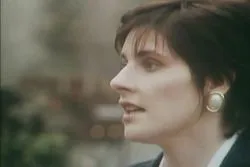
Enya performs "I Want Tomorrow" during a musical interlude in The Celts.
The documentary is widely recognized for introducing Irish musician Enya to a global mainstream audience following her departure from the folk group Clannad.
In 1985, BBC producer Tony McAuley initially asked Enya to write a single track for the series, leading her to submit "March of the Celts".
Director David Richardson liked the track so much that he abandoned the idea of hiring multiple composers and commissioned Enya to score all six episodes.
Score Composition and Visual Performance
Working alongside producer Nicky Ryan at Aigle Studio and the BBC studios in Wood Lane, London, Enya recorded 72 minutes of music for the project.
Granted complete creative control, she established her trademark musical sound characterized by complex vocal layering, atmospheric synthesizers, and intricate percussion.
Enya performs the main title theme "The Celts" at the start of every episode, and is glimpsed at the end of the opening credit sequence.
The broadcast also featured standalone music video interludes for "I Want Tomorrow" and "Aldebaran".
The performance for "I Want Tomorrow" stands out for its bold imagery, featuring Enya wearing leather biker attire in one scene and shooting fire from her fingertips in another.
The track "Aldebaran" was inspired by the brightest star in the Taurus constellation, representing a futuristic Celtic migration across space.
The 2004 DVD release capitalized on her star power by including exclusive contemporary interviews and rare performance footage.
Soundtrack Releases and Remasters
A 39-minute selection of the score was released in March 1987 as her debut solo album Enya by BBC Records in the UK and Atlantic Records in the United States.
The album reached number 8 in Ireland and number 69 in the UK, capturing the attention of Warner Music chairman Rob Dickins, who subsequently signed her to a major label contract.
The 1992 Remastered Reissue
In November 1992, WEA and Reprise Records reissued the remastered soundtrack under the new title The Celts, featuring fresh artwork and photography by David Scheinmann.
The reissued album reached number 10 on the UK Albums Chart and earned Platinum certifications in both the United Kingdom and the United States.
In addition to improved audio fidelity, The Celts substituted the original 1:23 instrumental track "Portrait" with a longer 3:12 version titled "Portrait (Out of the Blue)".
Unreleased Music and Cultural Legacy
Because the original album included less than 40 minutes of Enya's 72-minute total score, a substantial amount of music from the documentary remained officially unreleased.
According to lyricist Roma Ryan, director David Richardson requested specific pastiche styles to match the show's visuals, ranging from Spaghetti Westerns to film noir homages.
Key Soundtrack Milestones
- "The Celts" Single: Released in November 1992 to promote the reissued album, reaching number 29 in the UK alongside a music video filmed at Bodiam Castle.
- "Eclipse" B-side: The B-side for "The Celts" single, titled "Eclipse", was created by playing the soundtrack piece "Deireadh An Tuath" backwards.
- "Spaghetti Western Theme": The lost instrumental "Spaghetti Western Theme from The Celts" was finally released on the 2005 "Amarantine" single in memory of producer Tony McAuley.
- "Boadicea" Sampling: Named after Queen Boudica of the Iceni tribe, the instrumental track "Boadicea" became famous after being sampled by The Fugees on "Ready or Not", by Mario Winans on "I Don't Wanna Know", and by Metro Boomin on "Creepin'".